The Cold Corner Census: Finding the Spots in Your House That Freeze First
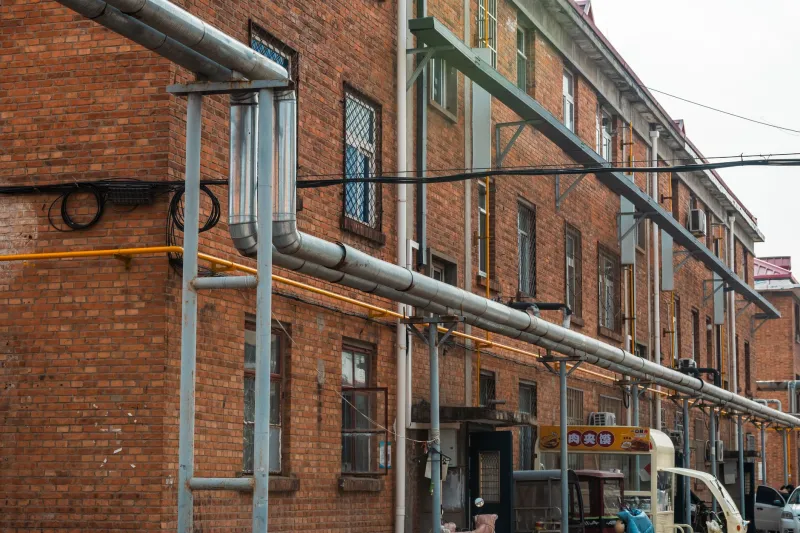
Every January there's a story doing the rounds about a pipe that split in a garage nobody had opened since October. The repair is never just the pipe: it's the ceiling below, the flooring, the insurance call, the dehumidifier humming in the hall for a fortnight. The good news is that the places most likely to freeze are few, predictable and cheap to check. You just have to go and look at them, which is the bit most of us skip.
First, a quick word about that dial in the garage
People often assume the little box on the wall of a plant room is a thermostat. It isn't, quite. A normal thermostat is about comfort: you set it to 20°C and the heating works to keep the house there. A frost stat is a safety switch. It sits at something like 5°C and only does anything when the air around it drops dangerously close to freezing, at which point it tells the boiler to fire regardless of what the rest of the house wants.
That distinction matters because frost stats get switched off, turned down or bypassed during building work and never put back. If yours lives in a garage, a loft or a lean-to boiler room, go and look at it this week. Five degrees is the sensible setting for most homes. Cranking it to 12°C just means the boiler runs more often for no extra protection.
The five-minute bit: one thermometer, one cold morning
You don't need an app. A cheap min/max thermometer, the kind with a little metal pointer that records the lowest temperature since you last reset it, costs somewhere between £8 and £15. Put it in your coldest suspected spot, leave it overnight, and read it at breakfast on a genuinely cold morning.
Anything that dips below about 5°C overnight is worth thinking about. Anything that regularly reads 2°C or under is a place where a pipe will eventually split. Write the numbers down somewhere. It's astonishing how quickly you forget which cupboard was the bad one.
Room by room, cold corner by cold corner
The garage and plant room
This is the classic. Boilers, stopcocks, outside tap pipework and the odd bit of heating pipe all end up here, often unlagged and often behind a stack of paint tins. Check whether the room has any heat at all, whether the door seals, and whether the frost stat is actually doing its job. If the boiler is out here, ask your engineer at the next service what temperature the frost protection is set to.
The loft
Lofts are cold, draughty and full of pipework that only matters twice a year. Look for tanks, exposed runs, and any pipe that disappears into a cold corner behind insulation. If you have a cold water tank up there, lag the tank itself but be careful about sealing every gap beneath it: in older homes a bit of warmth rising from the rooms below is doing useful work.
Outbuildings, sheds and converted garages
Anything you've turned into an office, a gym or a utility room needs a plan for the coldest two weeks of the year, not the average. A small tubular heater on a thermostat costs very little to run and will keep the edge off. If the building has a long external pipe run to it, that's where frost protection earns its money.
Under the sink, and the cupboard nobody opens
Kitchen and utility cupboards on external walls get properly cold. Open the doors on the worst nights and let room air in. If the pipework back there is bare, a metre of foam lagging costs a few pounds and takes about four minutes to fit.
Conservatories and unheated extensions
These sit in a strange middle ground: warm enough in the day to lull you, cold enough at 3am to freeze a radiator pipe. If there's heating out there, keep it on a low background setting rather than off entirely. If there isn't, check whether any water pipe runs through the space at all, and lag it if so.
The awkward ones
Outside taps, the condensate pipe from a condensing boiler, and any pipe run on a north-facing external wall. A frozen condensate pipe is one of the most common reasons a boiler locks out during a cold snap, and it usually shows itself as a gurgling noise and a fault code. Insulating the exposed section is a ten-minute job.
Spend on lagging before you spend on anything clever
If you do one thing, lag the pipes that sit in cold spaces. Foam lagging is roughly £2 to £4 a metre, and the priority order is simple: any pipe in an unheated space first, then long exposed runs, then the bits near valves and joints where the covering always seems to stop short. Don't lag a pipe beautifully and then leave a bare elbow at each end.
When trace heating or a plumber is genuinely worth it
Trace heating, a cable that warms a pipe run along its length, makes sense in a narrow set of cases: a long external run to an outbuilding, a vulnerable supply pipe in a very exposed position, or a property that has flooded before. It isn't a DIY afternoon and it isn't cheap. Get it specified and fitted properly, or don't bother.
Call a plumber if you have an unvented cylinder or complex pipework in a cold loft, if a pipe has frozen more than once in the same place, or if you can't work out where the run goes. That's not defeat, it's just sensible.
If you find one already frozen
Turn the stopcock off, then warm the pipe gently with a hairdryer on a low setting, working back from the tap end. No blowtorch, no boiling water on a freezing pipe. Once it's flowing, watch for a split and check the ceiling below.
A short list, not a shopping spree
A min/max thermometer, several metres of lagging, a roll of insulating tape, and possibly a frost stat plug adaptor for a small outbuilding. That's the whole kit. Most cold-weather plumbing disasters are prevented by looking, not by buying.
Put a note in your phone for late October next year. The census takes twenty minutes and pays for itself many times over.