Before the First Bulb Goes In: A Calm, Room-by-Room Festive Lighting Check

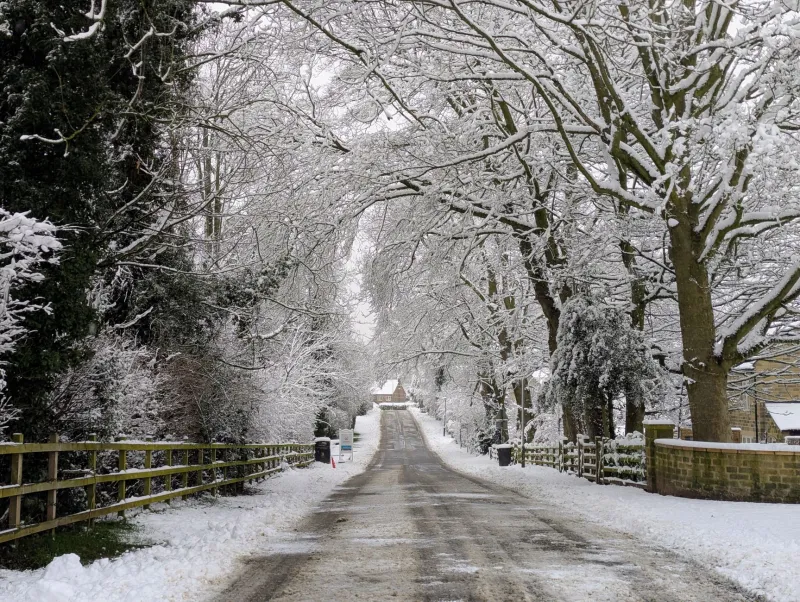
Photo: tangled Christmas fairy lights being checked on a table at home, via image.tmdb.org
There is a particular smell that comes out of a box of Christmas lights that has spent eleven months in the loft. Slightly dusty, faintly plasticky, with a hint of the cardboard it has been sitting in since January. It is the smell of tradition, mostly — but it is also the smell of something electrical that hasn't been looked at since the nights were long. Before you go looping it round the tree, it's worth spending an hour on the boring bits. Nothing dramatic, just a calm walk-through that means the lights go up once and stay up.
Start at the plug, not at the string
Most faults live at the ends, not in the middle. Pick up each set and look at the plug properly. In the UK, that means a standard 13-amp plug with a properly rated fuse — for a set of festive lights, that should almost always be a 3-amp fuse. If you find a 13-amp fuse in there, someone has been optimistic or careless. A 3-amp fuse is there to protect the thin cable, not to trip for fun.
Check the casing for cracks, look at the pins for scorching or discolouration, and make sure the fuse cover is present and snug. A plug held together with tape, or one where the cable disappears into the body with no grip at all, is telling you something. That set has done its service. Replace the plug with a proper UK one, or retire the set — there's no heroism in keeping a wobbly plug alive for one more December.
It's also worth pressing the test button on your consumer unit's RCD before you start. That's the switch with the little 'T' on it, usually in the fuse board. Press it; it should click off immediately. Reset it, and you've confirmed your safety net is actually there. It's a ten-second job that most of us skip for years.
The tangle test
Lay each set out flat on the floor or a table — properly flat, not in a heap. Run the cable through your fingers from plug to the far end. You're feeling for nicks in the insulation, spots where the cable has been crushed, and any place that feels warmer than the rest. You're also looking for rodent damage, which is more common in lofts than people expect, and for the tell-tale brown scorch marks near a lampholder.
Check the bulbs too. A cracked or blackened bulb is a tiny heater waiting to happen. If the set is a screw-in type with spare bulbs in the box, swap them now. If it's a modern sealed LED set, there's nothing to swap — but any flicker, half-dead section or intermittent connection means the set is on its way out. LED sets generally last well, but they aren't immortal, and the controller boxes on colour-changing sets are often the first thing to go.
Look for the UKCA or CE mark on the set and its transformer. Cheap imported sets with no proper marking, or with a two-pin plug forced into an adaptor, are the ones that appear in fire service warnings for a reason. You don't need to be frightened of them — just don't put them on a real tree in a real living room.
Extension leads: one lead, one job
Festive lights are low-load, especially LEDs, so a single well-made extension lead is rarely a problem. What causes trouble is the daisy chain — a four-way into a four-way into a four-way, all feeding a heater, a lamp and a set of lights. If you need that many sockets, you need a different arrangement, not a longer chain.
Keep leads off the floor where they'll be walked on, out from under rugs and away from doorways. Coiled-up extension leads under load get warm; leave them partly unwound. And if you're running anything outdoors, plug the extension lead into an RCD-protected socket — either one on the ring main itself or a plug-in RCD adaptor, which costs very little and gives you a reset button right where you need it.
Outdoors: get the IP rating right
Outdoor lights need to be rated for outdoors, and the number to look for is the IP rating. IP44 is the sensible minimum for a set that will see rain — it means protected against splashing water. If a set is going to sit in a exposed spot, or low down where water gathers, IP65 is the better choice. Anything with no IP rating belongs inside.
Transformers and controller boxes should live indoors or in a proper outdoor enclosure, not lying in a puddle behind the wheelie bin. Run cables along walls and fences with proper clips rather than nails, keep connectors off the ground, and leave a small drip loop where the cable enters the house so water runs off rather than in. And check the set before it goes up, not after — once it's tangled through a hedge, fault-finding is miserable.
A quick room-by-room sweep
In the living room, check the tree lights first, then any window sets, then the plug situation behind the television — that corner tends to collect adaptors. In the kitchen, keep lights away from the hob and anything that gets steamy. In children's rooms, check that sets are securely fixed and that cabling isn't trailing where it will be pulled. In the hallway, watch the cable run past the front door. Outside, walk the run of the lights and look for anywhere the cable crosses a path or sits in a low spot.
It sounds like a lot. In practice, with a cup of tea and the radio on, it's about an hour for a typical house — and most of that is untangling.
When to replace rather than repair
A good rule of thumb: repair the plug, replace the set. Frayed cable, scorched lampholders, a controller that flickers unpredictably, a set with no fuse and no marking — those are replacements. Old halogen sets are worth retiring on running cost alone; a modern LED set uses a fraction of the electricity and runs far cooler against dry tree needles.
And in January, do yourself a favour
When the decorations come down, coil each set loosely around your hand, secure it with a bit of string, and label it — 'tree', 'window', 'garden'. Store it somewhere dry and cool rather than a damp corner of the loft. Next November, the box will still smell faintly of cardboard, but the hour of checking will take twenty minutes instead. That's a decent trade.